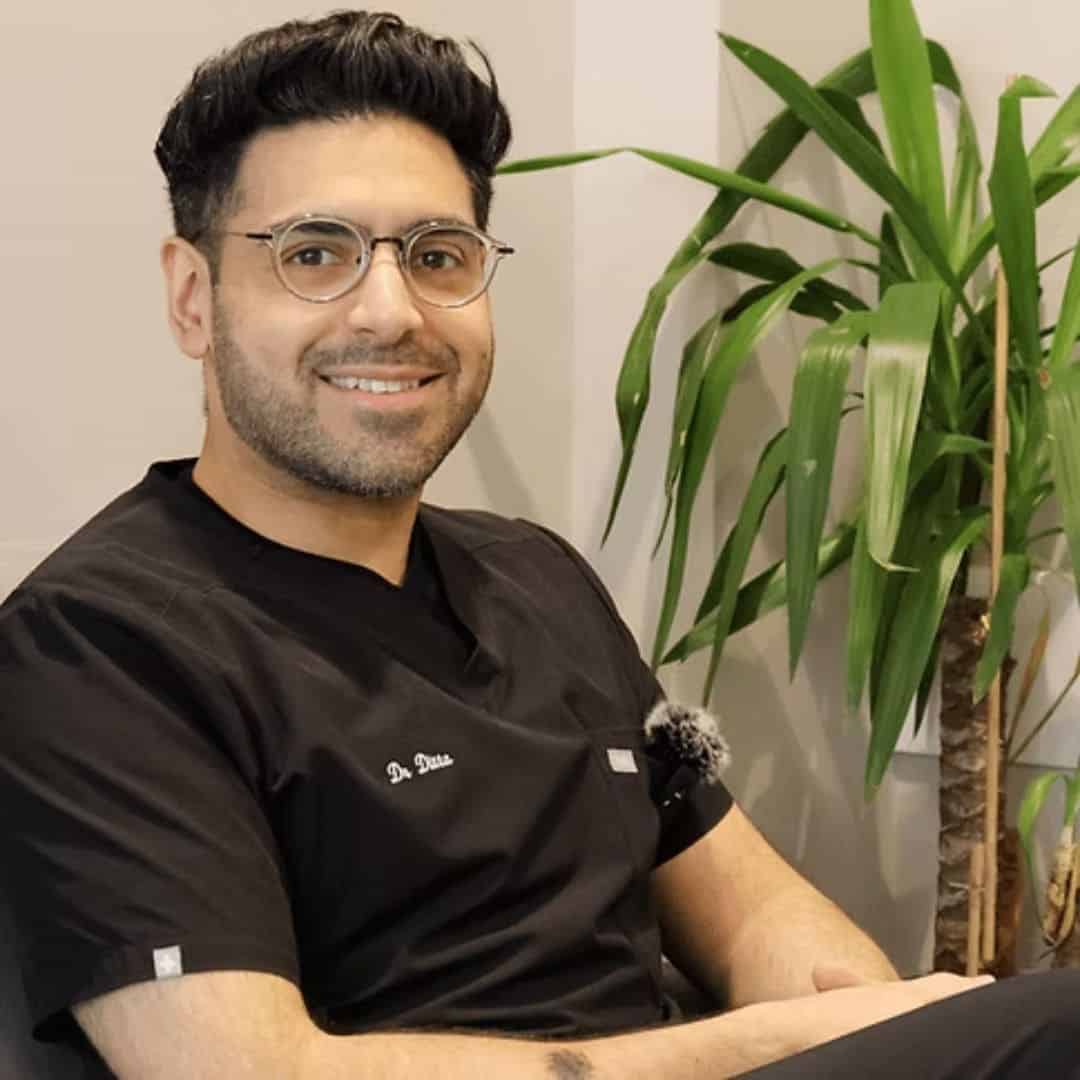





Every procedure at Hair Transplant Belfast is led by a GMC-registered surgeon throughout
Based in the centre of Belfast, close to transport links across the city and beyond
An honest assessment of your candidacy and expected outcome, with no obligation to book
Your surgeon performs every stage of your procedure, extraction, channel creation, and implantation
A hairline hair transplant at Hair Transplant Belfast addresses frontal recession using the FUE technique to restore a natural hairline position and density. The hairline is one of the most visible aspects of hair restoration and its design requires precision, conservatism, and a clear understanding of how the face will age.
Hairline Hair Transplant in Belfast
Hairline recession is typically the first visible sign of male pattern hair loss. As the frontal hairline retreats and the temples thin, the face changes shape significantly. A hairline transplant can restore the hairline to a position that suits the patient’s face, frames the features correctly, and looks natural at the current age and in the decades ahead.
Follicular unit extraction removes individual follicles from the back of the scalp and transplants them to the receded area. For patients with existing hair in the frontal zone who need coverage around it, the DHI technique is sometimes preferred. At the hairline edge specifically, only single-hair follicular units are used. Two- and three-hair grafts placed at the very front create an unnatural density line. The natural hairline has a gradual transition from single hairs at the edge to fuller density behind it, and recreating this requires careful graft selection and placement.
Hairline Design
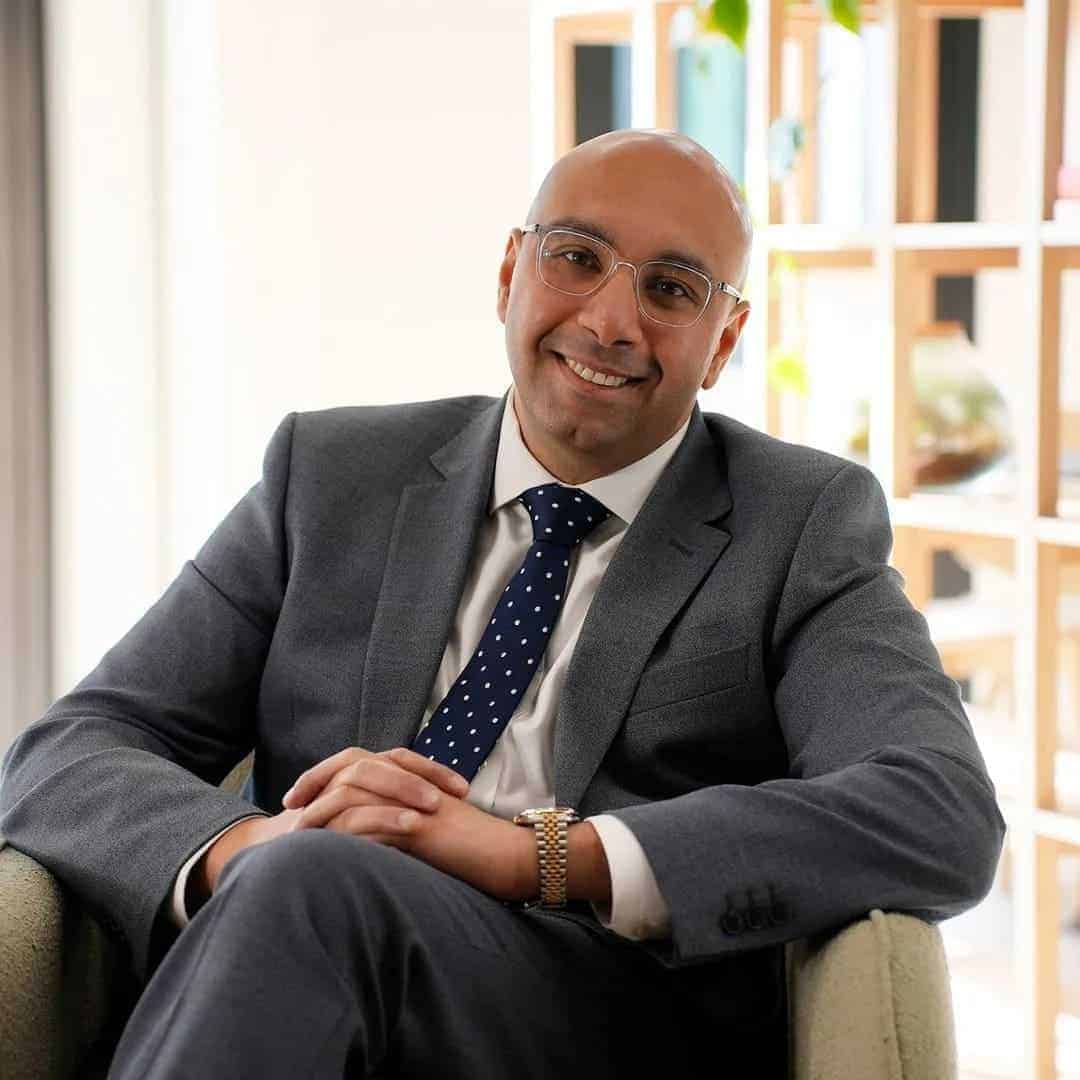
Before the procedure, Dr. Aziz Elgindi (GMC: 7450896) or Dr. Mohammed Ditta (GMC: 7084372) will design the new hairline with the patient. Several factors are considered: the current position of the recession, the patient’s age and likely future hair loss trajectory, the facial structure, and the patient’s expectations. A hairline placed too low for a man in his 30s with ongoing hair loss will look out of place in his 50s if further loss occurs behind it.
We aim for a hairline that looks natural today and ages well. Patients who want their teenage hairline restored are usually advised that a more conservative placement will serve them better long-term. Patients who prefer to avoid shaving the donor area may want to discuss FUT, though this is less common for hairline-only procedures.
How Many Grafts Are Needed?
A hairline restoration typically requires 1,200 to 2,500 grafts depending on the degree of recession and the desired density. Significant frontal recession combined with temple thinning may require more. The graft count is confirmed at consultation after a clinical scalp assessment.
If the crown is also thinning, combined treatment planning is important. See our page on crown hair transplant for information on addressing that area.
Understanding Hairline Recession and the Norwood Scale
Male pattern hairline recession follows a broadly predictable sequence described by the Norwood-Hamilton scale. Norwood Type I and II represent early recession around the temples with minimal frontal retreat. Types III and IV show more pronounced temporal recession and thinning behind the hairline. Types V through VII describe progressive loss extending from the front to the crown, eventually leaving only a horseshoe of hair around the sides and back.
Understanding where you sit on this scale matters not just for planning the current procedure, but for thinking about what further loss is likely. A patient at Norwood III in his late 20s may reach Norwood V or VI within a decade if hair loss follows a typical pattern for his family history. Planning a hairline transplant without accounting for this trajectory can result in an isolated front hairline sitting above advancing baldness within a few years.
This is not a reason to avoid surgery. It is a reason to plan it carefully, at the right position and with enough conservatism to remain appropriate as the surrounding hair continues to change. Medical management with finasteride and minoxidil alongside a transplant can slow or halt further recession in untreated areas.
What Makes a Natural Hairline?
A natural hairline is not a straight line. It has micro-irregularity, meaning individual hairs at the very edge are slightly uneven in their placement rather than sitting in a uniform row. It has a gradual transition from single, fine hairs at the front edge to fuller density a few centimetres behind. It frames the face differently at different angles, which a perfectly symmetrical or geometrically precise hairline does not.
At Hair Transplant Belfast, only single-hair follicular units are used at the hairline edge. Two- and three-hair grafts are placed further back in the frontal zone to build density, but the leading row is always single hairs placed at a very low angle to create the soft, natural transition that distinguishes a good transplant from an obvious one.
The temporal recession also matters. For many patients with frontal hairline recession, the temples have receded too. Restoring just the frontal line without addressing the temples can leave a shape that does not match the natural hairline of the patient’s age or facial structure. Temple work typically adds 200 to 400 grafts to the session.
Hairline Transplant Without Shaving: The FUT Option
Some patients cannot take time off work with a shaved donor area and want to keep the procedure as discreet as possible. For these patients, FUT is worth discussing. With FUT, only the narrow donor strip at the back of the scalp is shaved, and the surrounding hair immediately above and below the strip conceals it. The recipient area in the frontal zone does not need to be shaved.
This option involves a linear scar at the donor site, which is the trade-off. For patients who consistently wear their hair at a length of grade 3 or above at the back, this scar is not visible and the recovery is considerably more discreet than a fully shaved FUE procedure.
Before and After Hairline Hair Transplant Results in Belfast
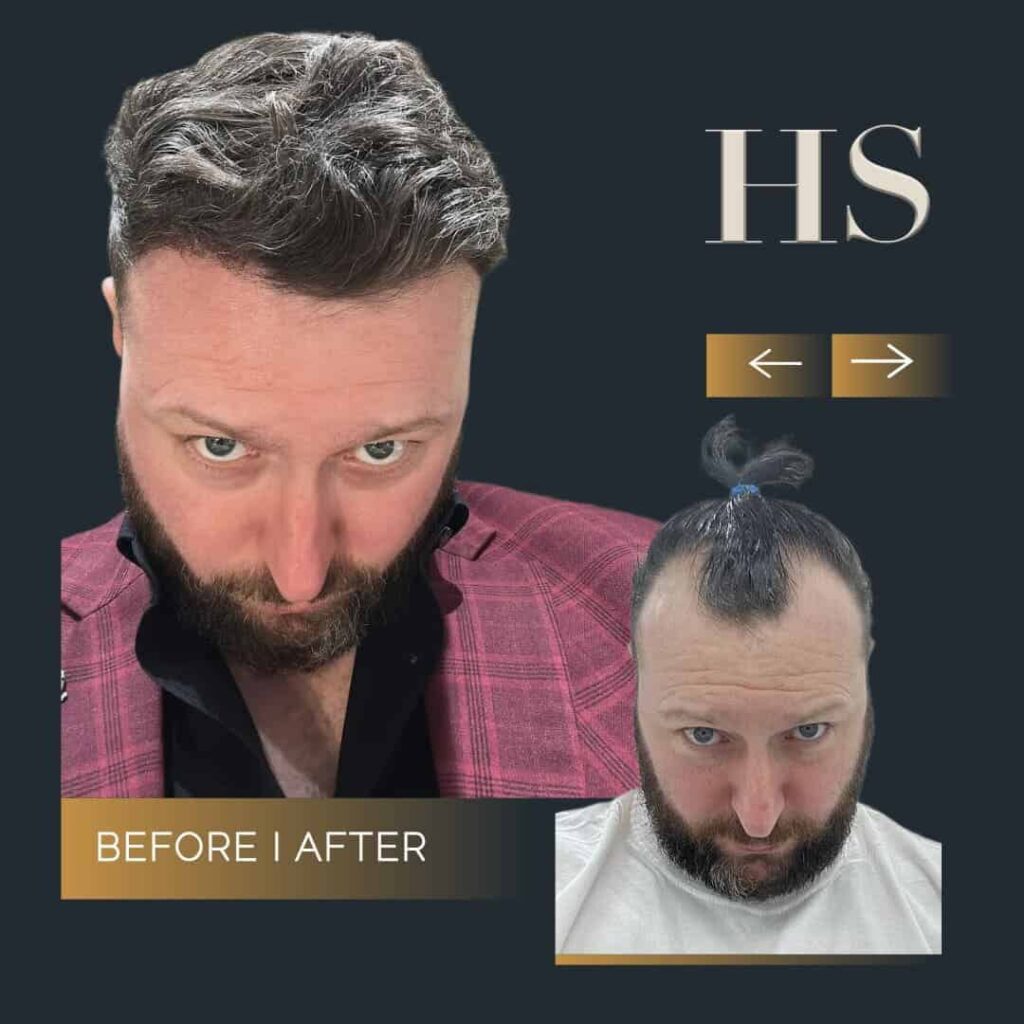
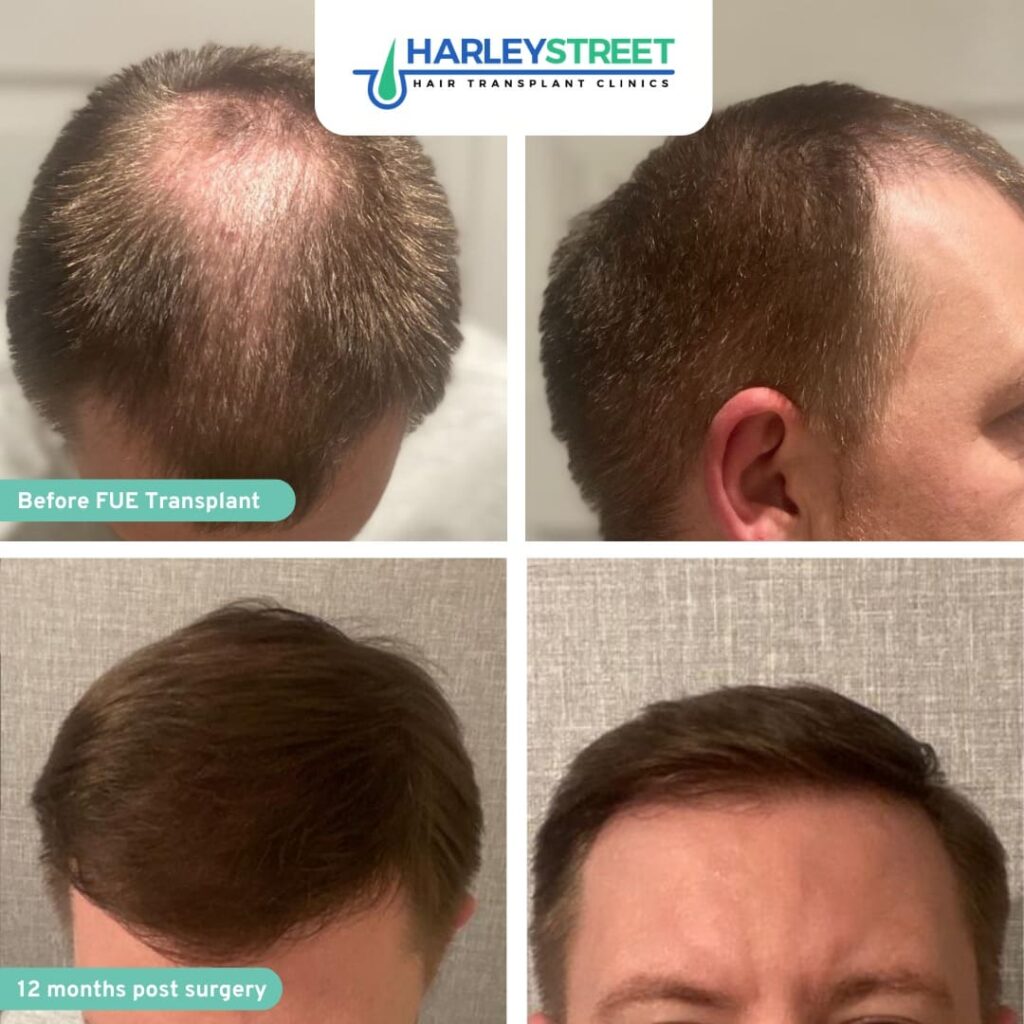
A selection of results from patients treated at our Belfast clinic. Every procedure shown was performed by our GMC-registered surgeons. View the full gallery.


Cost
Hairline transplant pricing is based on graft count, confirmed at consultation. See our hair transplant costs for the full breakdown. Finance options are available on our hair transplant finance. Other procedures available at Hair Transplant Belfast include beard transplants, eyebrow restoration, treatment for hair loss in women, and transgender hair restoration.
Next Steps for your Hair Transplant in Belfast
1) Get in Touch With Us

During the initial call, we will make arrangements to schedule a consultation at a convenient date and time.
2) FREE Online Consultation

The FREE online consultation will give us the opportunity to discuss your concerns and identify the most advantageous treatment plan, along with the associated treatment price.
3) Book Hair Transplant

If you’re happy with the advice and treatment proposal, all that is left to do is schedule your treatment. Let’s eliminate your hair loss and regain your confidence!
Where to Find Us
Hair Transplant Belfast
12-16 Bridge St
Belfast BT1 1LU
Call us to book your free consultation. Our team will confirm availability and answer any questions before you come in.
FAQs
The appropriate hairline position depends on your facial proportions, age, and the likely progression of your hair loss. A hairline placed too low for your face or too aggressive for your age can look unnatural in later years if surrounding hair continues to thin. Your surgeon will propose a hairline position at consultation and explain the reasoning. You have final say on the design.
Yes, when executed correctly. The hairline edge uses only single-hair follicular units placed at a very low angle to create a soft, gradual transition. Two- and three-hair grafts are positioned further back to add density. This graduated approach is what produces a natural-looking result.
Transplanted hairs at the hairline are resistant to the DHT that causes male pattern hair loss, because they come from the permanent donor zone. However, hair behind and around the transplanted area may continue to thin if the underlying hair loss is progressive. Your surgeon will discuss this risk at consultation and may recommend medical treatments to slow ongoing loss in untreated areas.
Yes. Hairline refinement procedures are possible where additional grafts are placed to improve density or adjust the edge. Any refinement must account for the remaining donor supply. Over time, as hair loss progresses, patients sometimes choose to address the crown or midscalp in subsequent sessions.
Transplanted hairs shed at two to four weeks. New growth begins from around three months. The hairline continues to fill in and mature up to 12 to 18 months. The final result is assessed at that point.
A hairline transplant specifically addresses the frontal hairline and temples. A full hair transplant may also cover the midscalp and crown. For patients with recession limited to the frontal zone, a hairline transplant is often the right scope. For more extensive hair loss, a combined approach covering more of the scalp may be recommended.
Patient Testimonials
Aside from achieving fantastic results, we believe that keeping in touch with our patients before, during and after their hair transplantation procedure is paramount – it helps to keep our patients feeling calm and in control. We’re always on hand to provide guidance, support and aftercare advice. Time and again, our patients tell us that this is what sets us apart from other clinics.
You can read our great reviews of FUE hair transplants over on Google and Trustpilot