



Every procedure at Hair Transplant Belfast is led by a GMC-registered surgeon throughout
Based in the centre of Belfast, close to transport links across the city and beyond
An honest assessment of your candidacy and expected outcome, with no obligation to book
Your surgeon performs every stage of your procedure, extraction, channel creation, and implantation
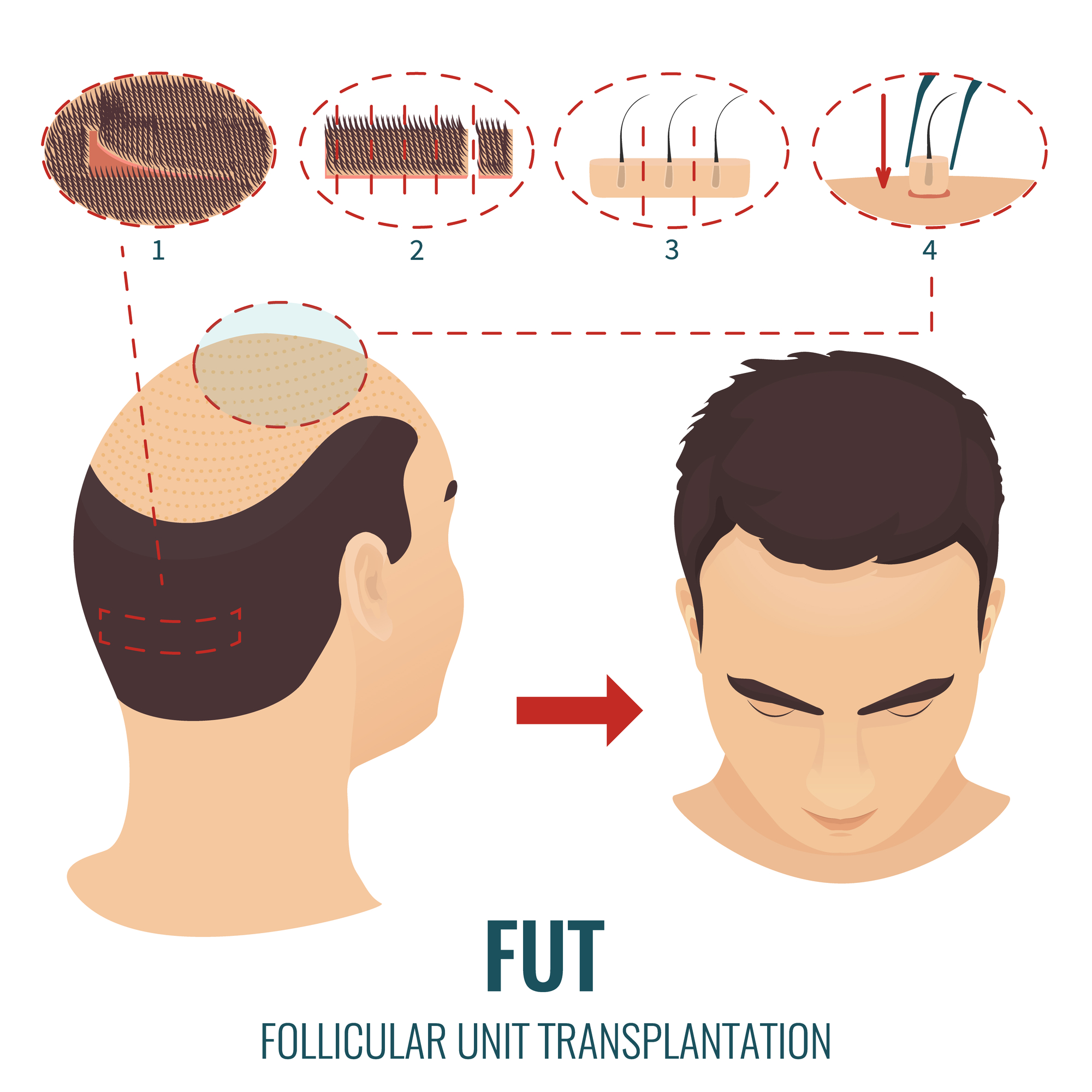
Follicular unit transplantation (FUT) is a hair transplant technique in which a strip of scalp is removed from the donor area, from which individual follicular units are dissected under a microscope and transplanted to the thinning zone. At Hair Transplant Belfast, FUT is offered for patients who need a high graft count in a single session or who have a dense donor area suited to strip harvesting.
FUT Hair Transplant in Belfast
FUT predates FUE but remains a valid option in specific clinical situations. The technique involves taking a strip of tissue from the back of the scalp, closing the wound with sutures, and dissecting the strip into individual follicular units in the lab. These units are then implanted into the recipient area in the same way as with FUE.
The main advantage over FUE is graft yield. Because the strip is dissected under magnification by trained technicians, follicular units are preserved with high accuracy and the transection rate can be lower than with FUE in patients with difficult donor characteristics, such as very curly or fine hair. Patients who need 3,500 or more grafts in a single sitting and have a tight scalp that limits FUE yield may get a better clinical outcome with FUT.
The FUT Scar
FUT leaves a linear scar at the back of the scalp where the strip was removed. In most patients this scar is thin and easily concealed by surrounding hair at a length of grade 3 or longer. Patients who keep their hair shaved or very short at the back should be aware that the scar may be visible. For frontal recession, a hairline hair transplant with FUE is often preferred as it avoids any linear scar. For crown thinning requiring a high graft count, FUT is sometimes the better tool. The wound is closed with trichophytic closure, which allows hair to grow through the scar line and reduces its visibility over time.
Patients who wear their hair short and want to avoid any linear scarring are better suited to FUE or the DHI technique.
Who Should Consider FUT?
FUT is worth considering if you have advanced hair loss requiring a large number of grafts. Note that for facial procedures such as beard transplants and eyebrow restoration, FUE with a Choi pen is always used rather than FUT. For transgender patients needing high graft counts for hairline feminisation, FUT is sometimes discussed but requires careful planning around the scar, if you have a tight scalp that limits FUE extraction, if your hair characteristics make FUE transection a concern, or if you are comfortable keeping your hair long enough to cover the donor scar. FUT can also be combined with FUE in subsequent sessions to maximise total lifetime graft availability.
Women experiencing significant hair loss may also benefit from FUT, as the technique does not require shaving the recipient area and the donor scar is concealed by surrounding hair.
The FUT Procedure: What to Expect on the Day
The procedure begins with the patient sitting comfortably in the chair while local anaesthetic is applied to the donor area at the back of the scalp. Once the area is fully numb, a strip of scalp tissue is removed from the mid-donor zone. The width and length of the strip is planned before the procedure based on your graft requirement and scalp laxity. The wound is then closed using trichophytic closure, a technique that allows hair to grow through the scar line and reduces its long-term visibility. Sutures or staples are placed and covered.
The excised strip is passed to a specialist team who work under magnification to dissect it into individual follicular units. This dissection process runs in parallel with the preparation of the recipient area, so the grafts are ready for implantation as soon as the channels are made. Follicles are then placed into the recipient area using fine instruments, in the same way as with FUE.
Most FUT sessions take seven to nine hours. The recipient area work is similar in technique to FUE. You rest, eat and take breaks throughout the day. Sutures are removed at around 10 to 14 days post-procedure at a follow-up appointment.
FUT Recovery: A Realistic Timeline
The first few days involve tenderness at the donor site, where the suture line will feel tight. Most patients manage this well with standard pain relief and find the discomfort settles considerably by day four or five. Sleeping at a slight incline for the first night reduces swelling. The recipient area develops small scabs around the transplanted follicles, which resolve within 10 to 14 days.
Transplanted hairs shed at two to four weeks. This is expected and does not indicate failure. The follicles remain in the scalp and enter a resting phase. New growth begins from around three months, with meaningful density visible at six months. The full result is assessed at 12 to 18 months. The donor scar, closed with trichophytic closure, continues to mature and lighten for six to twelve months after surgery. At normal hair lengths of grade 3 or above it is not visible.
Patients should avoid strenuous exercise, swimming and direct sun exposure to the scalp for at least two weeks. Heavy physical work that requires bending or lifting should be avoided until the sutures are removed and the donor site has healed.
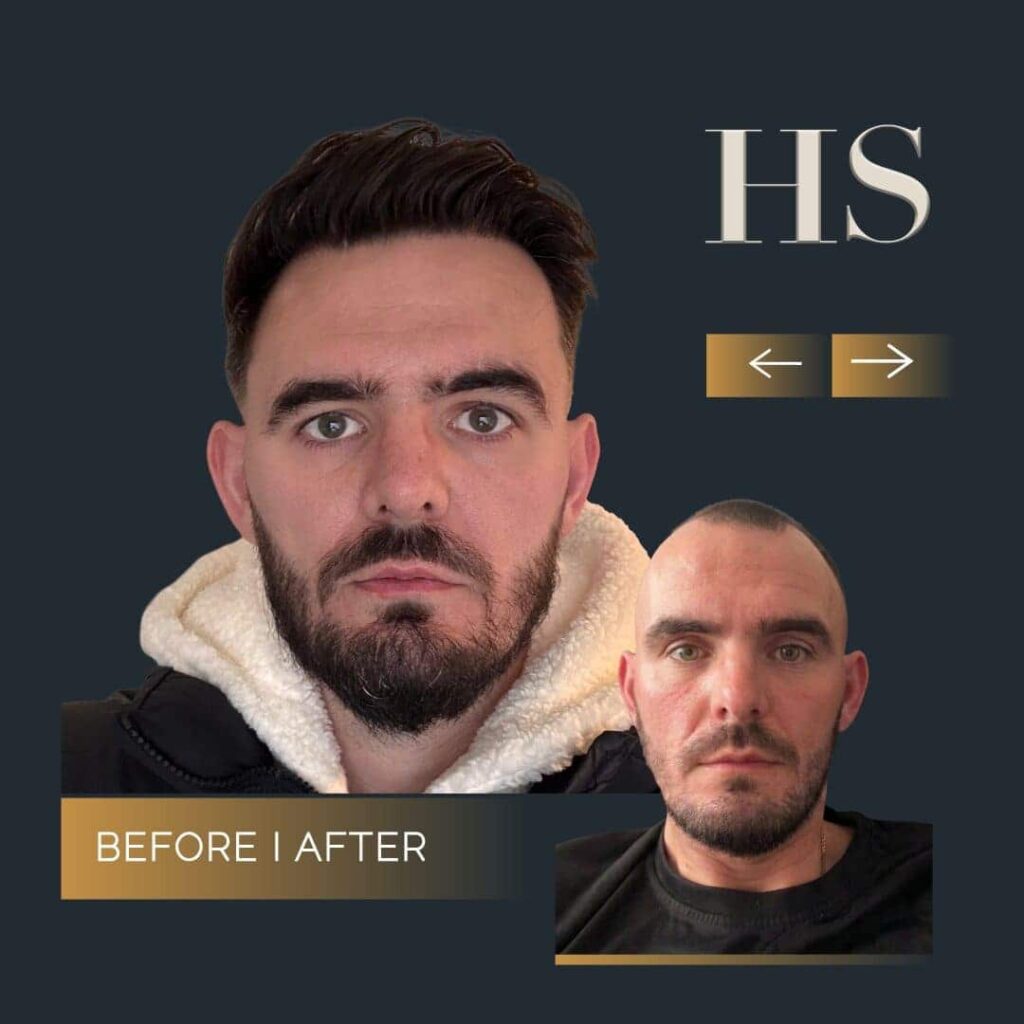
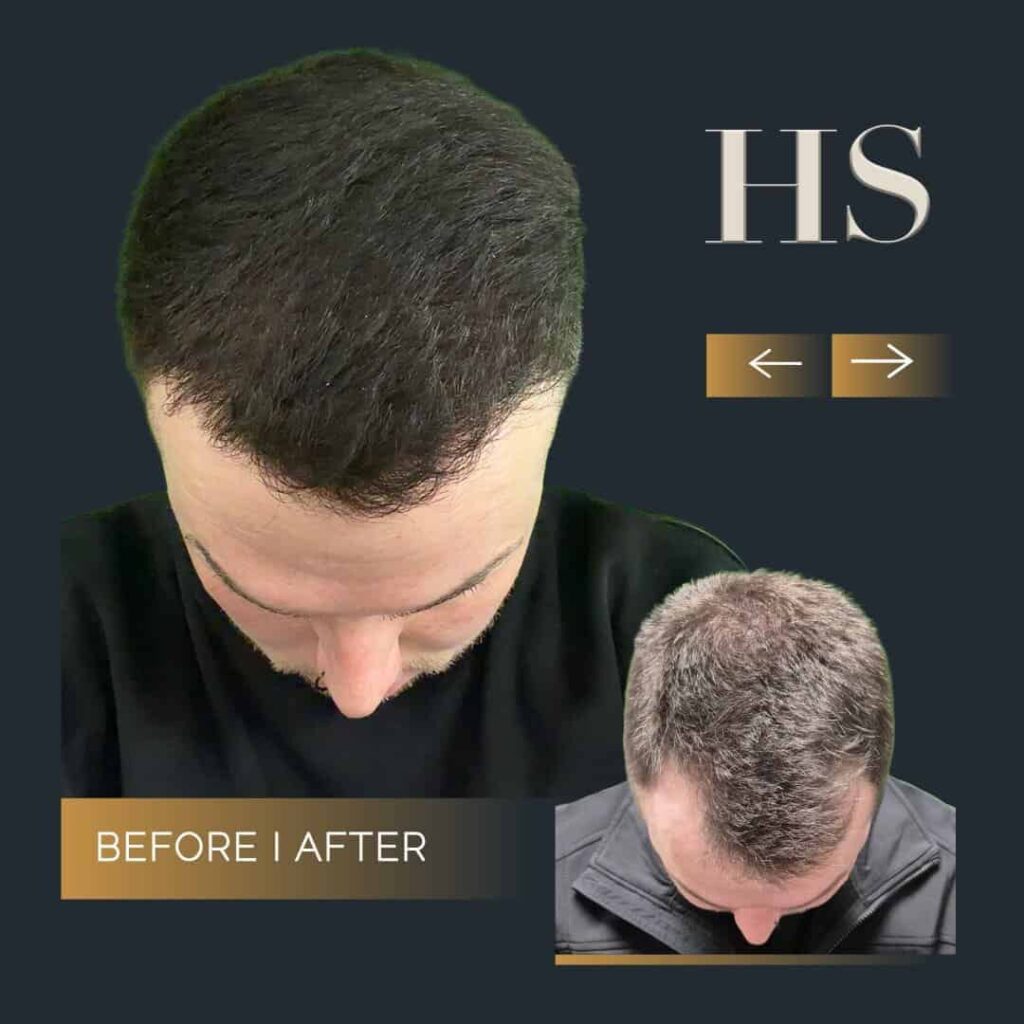
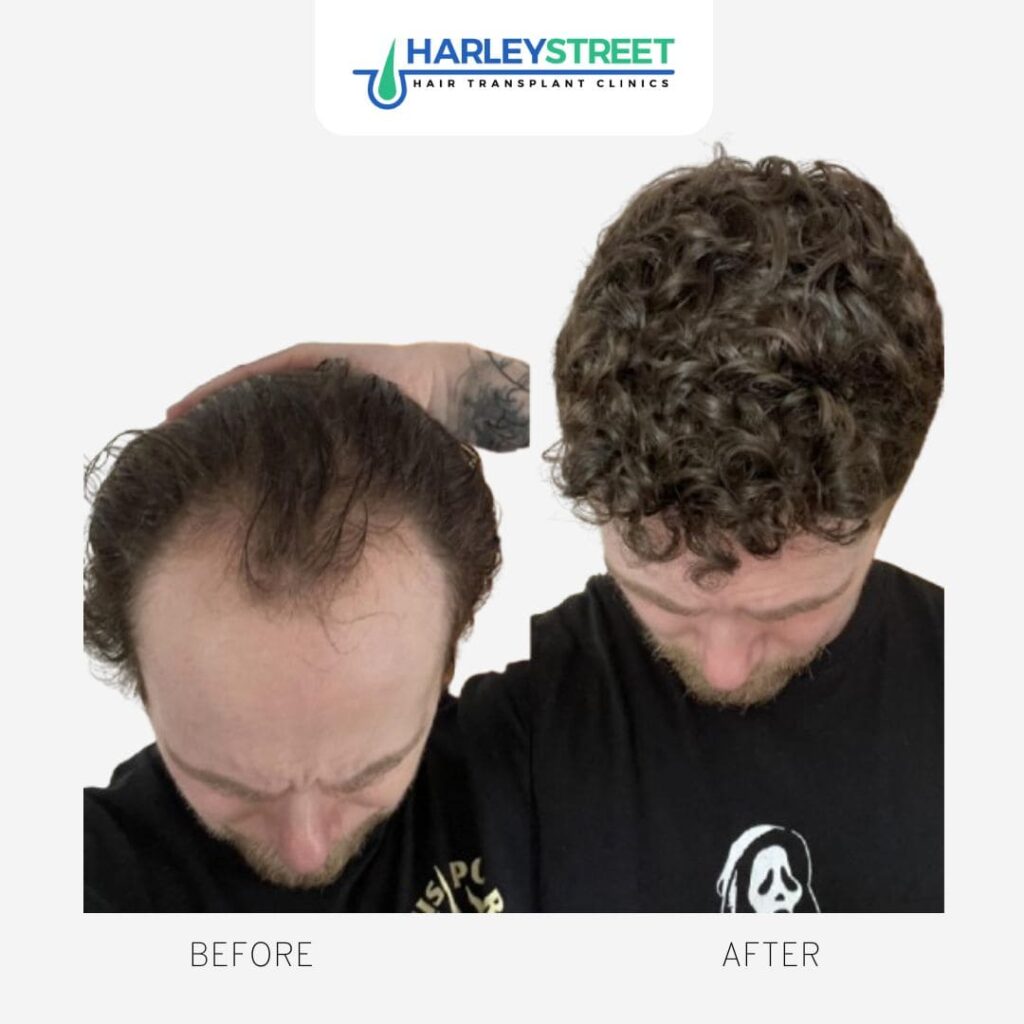
Before and After FUT Hair Transplant Results in Belfast
A selection of results from patients treated at our Belfast clinic. Every procedure shown was performed by our GMC-registered surgeons. View the full gallery.
Cost
FUT pricing is based on graft count, confirmed at consultation. See our hair transplant costs for current pricing. Finance options are available on our hair transplant finance.
Next Steps for your Hair Transplant in Belfast
1) Get in Touch With Us

During the initial call, we will make arrangements to schedule a consultation at a convenient date and time.
2) FREE Online Consultation

The FREE online consultation will give us the opportunity to discuss your concerns and identify the most advantageous treatment plan, along with the associated treatment price.
3) Book Hair Transplant

If you’re happy with the advice and treatment proposal, all that is left to do is schedule your treatment. Let’s eliminate your hair loss and regain your confidence!
Where to Find Us
Hair Transplant Belfast
12-16 Bridge St
Belfast BT1 1LU
Call us to book your free consultation. Our team will confirm availability and answer any questions before you come in.
FAQs
The sutures or staples from the donor site are removed at around 10 to 14 days post-procedure. Most patients find the donor area comfortable within the first week with standard pain relief. The scar continues to mature and lighten over 6 to 12 months. Strenuous activity should be avoided for at least two weeks to prevent tension on the donor wound.
Yes. In cases where the scar is wider than expected, FUE grafts can be transplanted directly into the scar tissue to reduce its visibility. This is a separate procedure and requires a consultation to assess the scar characteristics.
Both procedures are performed under local anaesthesia. The donor area sensation differs: with FUT, you may feel tightness or discomfort from the suture line during the first week. FUE typically produces less post-operative donor discomfort. Recipient area recovery is comparable between the two techniques.
Yes. Many patients start with FUT for maximum graft yield and later use FUE to supplement further, including harvesting from outside the donor strip area. Planning for this from the outset is important so the first FUT session preserves the FUE donor zones for future use.
The quality of the transplanted grafts and the resulting hair growth are comparable between the two techniques when performed well. The choice between FUT and FUE is primarily about graft yield, scarring profile, and patient-specific factors. Neither technique is universally superior in terms of final result quality.
The donor strip area at the back of the scalp will be shaved. The recipient area does not need to be shaved with FUT, which is one reason the technique is sometimes preferred by women or men who cannot take time off work with a shaved head.
Patient Testimonials
Aside from achieving fantastic results, we believe that keeping in touch with our patients before, during and after their hair transplantation procedure is paramount – it helps to keep our patients feeling calm and in control. We’re always on hand to provide guidance, support and aftercare advice. Time and again, our patients tell us that this is what sets us apart from other clinics.
You can read our great reviews of FUE hair transplants over on Google and Trustpilot