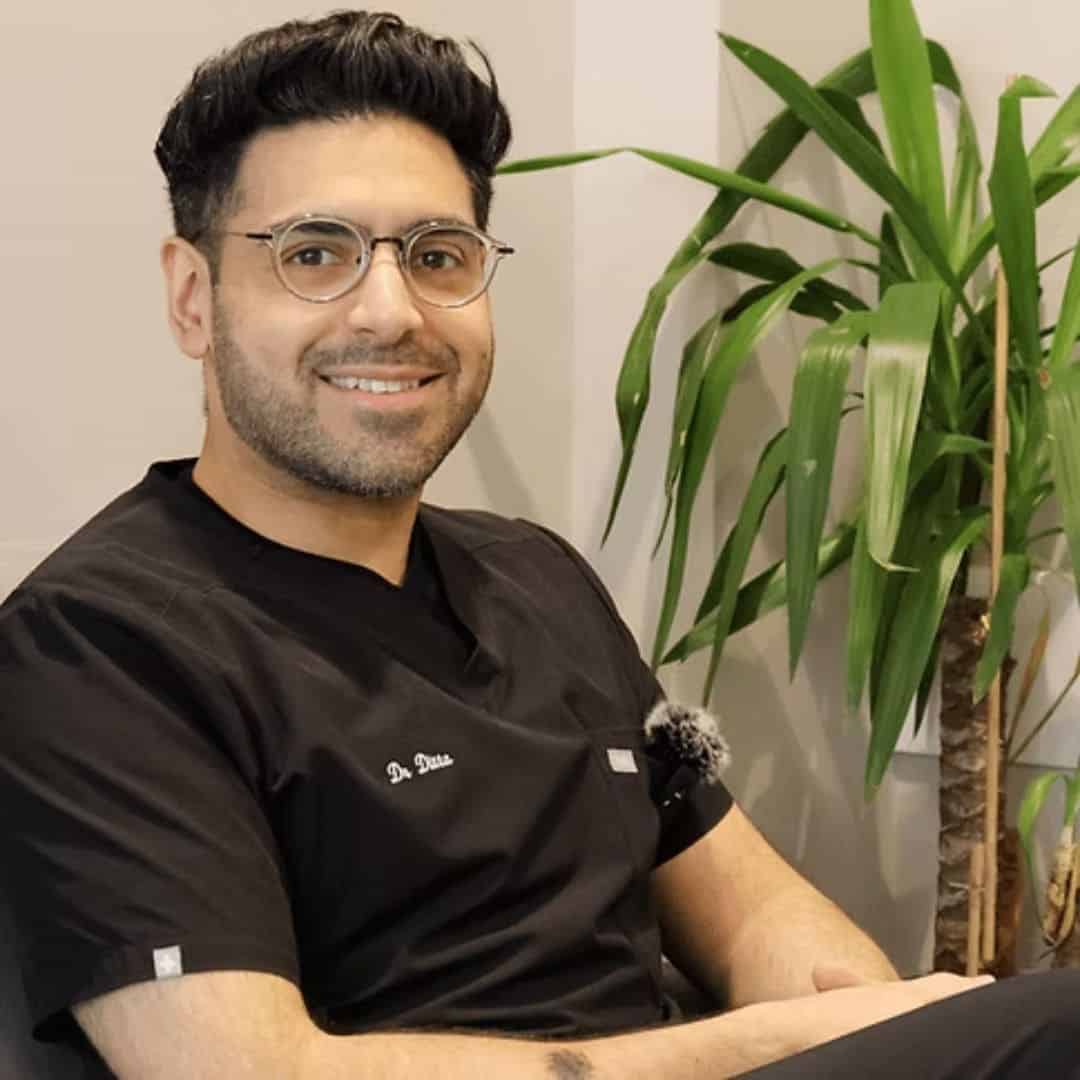





Every procedure at Hair Transplant Belfast is led by a GMC-registered surgeon throughout
Based in the centre of Belfast, close to transport links across the city and beyond
An honest assessment of your candidacy and expected outcome, with no obligation to book
Your surgeon performs every stage of your procedure, extraction, channel creation, and implantation
Hair transplant surgery for transgender patients addresses two distinct presentations: hairline feminisation for trans women, and beard transplantation and hairline masculinisation for trans men. At Hair Transplant Belfast, we approach transgender hair restoration with the same clinical care as all our procedures, with specific attention to the anatomical and hormonal differences relevant to each patient’s situation.
Transgender Hair Transplant in Belfast
Transgender hair restoration is not a single procedure but a category that covers several different goals depending on the patient’s gender journey and the specific changes they want to address.
For trans women: The male hairline sits higher and has more pronounced temporal recession than a female hairline. Hairline feminisation lowers the frontal hairline and fills in the temples to create a curved, softer hairline shape consistent with female hair patterns. The procedure uses FUE to transplant follicles from the donor area to the frontal zone and temples, with FUT considered for patients with more advanced recession requiring higher graft counts. Crown thinning in trans women may also need to be addressed if male-pattern baldness progressed before transitioning. The graft count depends on the degree of existing recession, which may be significant if the patient experienced male pattern baldness before transitioning.
Patients on oestrogen therapy who have stopped any active hairline recession are the best candidates. Hormone-induced stabilisation is important before surgery, as a receding hairline at the time of the procedure may continue to change in the months following.
For trans men: Testosterone therapy typically stimulates beard growth and can produce male-pattern hairline characteristics over time. Patients who have been on testosterone for several years and have not developed the beard density they want, or who have a hairline that has not responded to hormone therapy, may benefit from surgical intervention. Beard transplantation using the DHI technique is the primary option for trans men wanting facial hair, and eyebrow restoration is also available for trans women wanting denser brows.
Consultation
Transgender hair restoration requires an extended consultation. We take a full history including hormone therapy timeline, surgical history, and current goals. For trans women, we assess the degree of male-pattern recession, the existing hairline position, and the donor supply. For trans men, we assess facial hair distribution and what beard density is achievable given the available donor area.
Trans men who have developed hair loss on testosterone are assessed on the same clinical basis as male pattern baldness. All patients should be stable on hormone therapy for at least 12 months before surgery is considered, ideally longer. This ensures the hair loss pattern is stable and the surgical plan reflects the patient’s long-term hair situation rather than a transitional state.
What Makes a Feminine Hairline: The Anatomy
Male and female hairlines differ in several specific ways. A male hairline typically sits higher on the forehead, has pronounced temporal recession forming an M-shape, and has a flatter, more horizontal frontal border. A female hairline sits lower, has a rounded arch that frames the forehead, retains hair in the temples with a softer curve rather than sharp recession, and often has a slight widow’s peak at the midline.
Hairline feminisation does not simply mean lowering the front of the hairline. It means reshaping the entire perimeter, including filling the temporal recession, softening the corners and creating the rounded arch profile that characterises a feminine hairline shape. The amount of reconstruction required depends on how much male-pattern recession has occurred. A trans woman who transitioned before significant male-pattern loss had progressed may need only minor refinement. A patient who experienced Norwood IV or V recession before transitioning requires a more substantial reconstruction covering the temples, frontal zone and possibly the midscalp.
Only single-hair follicular units are used at the very edge of the new hairline. The transition from the hairline forward to bare forehead must be gradual and natural, with micro-irregularity at the edge rather than a uniform line.
Hair Restoration for Trans Men in Belfast
For trans men, testosterone therapy typically stimulates beard growth and can cause androgenetic alopecia in those with genetic predisposition. The hair loss pattern on testosterone follows male pattern progression, usually beginning with temporal recession and advancing toward the crown. This progression can happen relatively quickly in some patients.
Trans men who want to preserve scalp hair while on testosterone have the same medical options as cisgender men. Finasteride reduces DHT activity and can slow loss, though it may affect testosterone-related changes in other ways and requires individual medical review before use. Minoxidil is an alternative with no hormonal effects.
For trans men who have experienced hair loss on testosterone and want restoration, the procedure is assessed on the same clinical basis as male pattern baldness. Donor density, the extent of loss, and future trajectory are all considered. FUE is typically the technique of choice for scalp work.
Beard transplantation for trans men uses the DHI technique to place follicles at the precise angles required for natural facial hair. The best time for this procedure is after testosterone has had time to stimulate what natural beard growth it will produce. Most surgeons recommend waiting two to three years on testosterone, as surgery before the natural growth has reached its plateau can result in an overly dense result if the testosterone-driven beard continues to develop after the transplant.
Preparing for Surgery: Timing and Candidacy
The most important preparation step is stabilising on hormone therapy before surgery. For trans women, oestrogen therapy slows and often stops male-pattern hairline recession. Surgery should be delayed until the hairline has been stable for at least 12 months, and ideally 18 to 24 months, following the start of oestrogen. A hairline that is still changing at the time of surgery will not hold the same design once the procedure is complete.
For trans men, similar logic applies to beard work. Testosterone-driven beard growth can continue for two to three years after starting HRT. Surgical beard augmentation is best timed after the natural testosterone response has reached its limit, so the surgeon is designing around a stable baseline rather than an area still changing.
All patients are also assessed for the general health factors that affect any surgical candidate: scalp health, chronic conditions, medications, and realistic expectations about the achievable result. Trans patients who have undergone other gender-affirming procedures should mention this at consultation, as some surgical histories are relevant to planning.
At Hair Transplant Belfast, all consultations and records are handled with full confidentiality. Patients are welcomed under any name they are comfortable with.
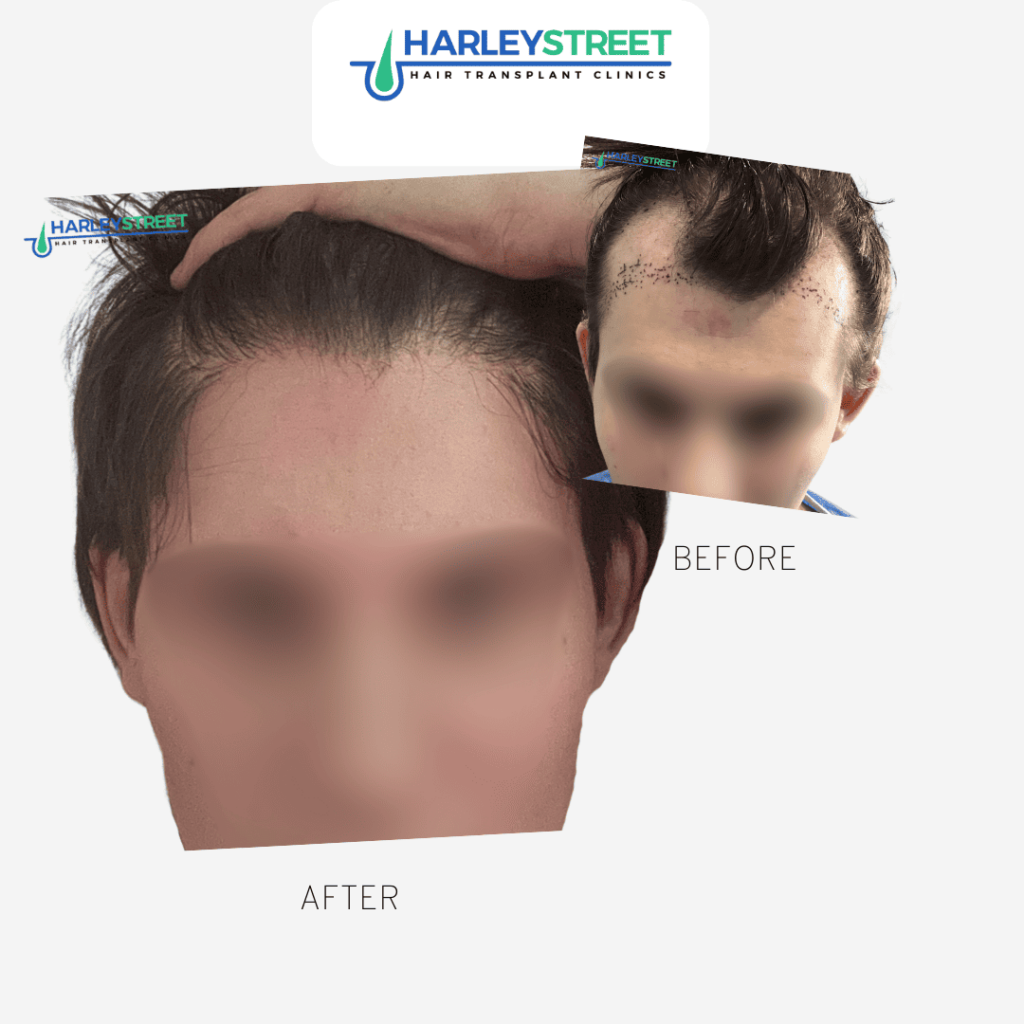
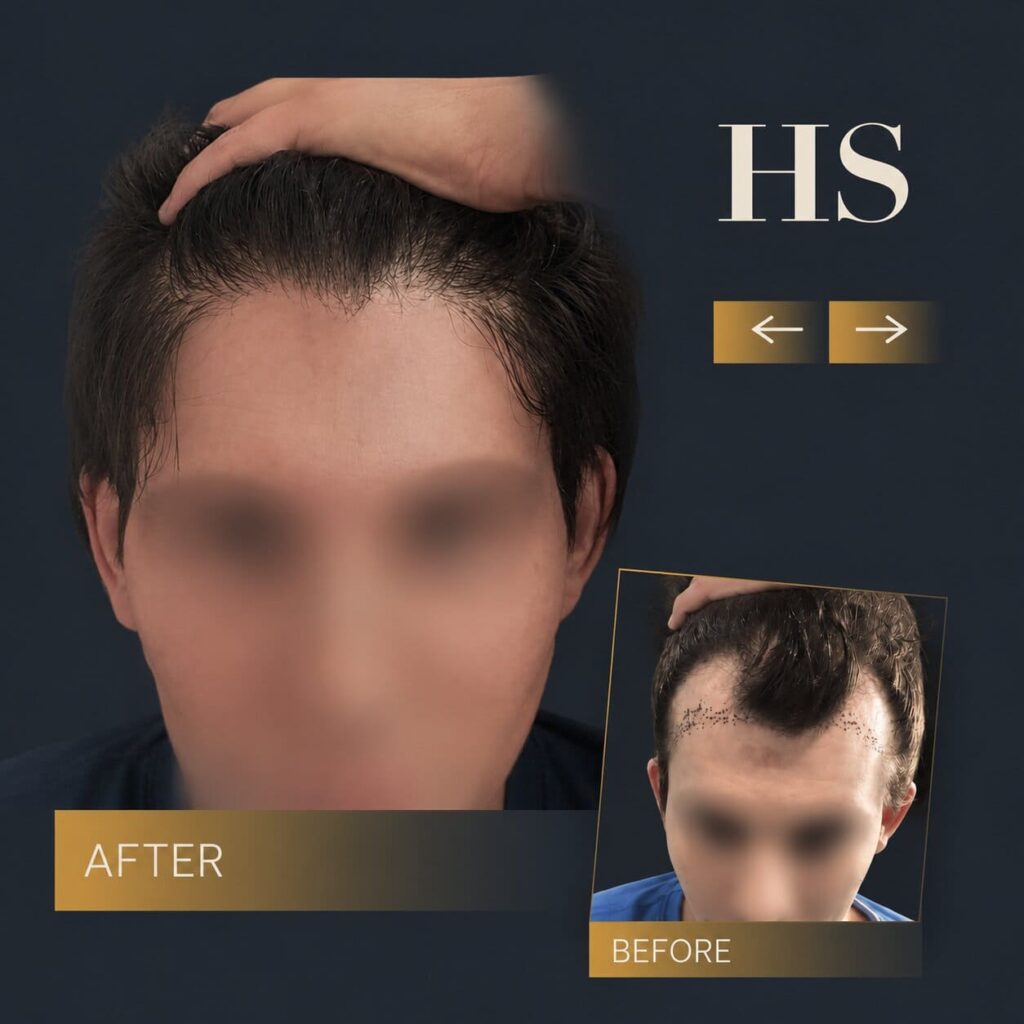
Before and After Transgender Hair Transplant Results in Belfast
A selection of results from patients treated at our Belfast clinic. Every procedure shown was performed by our GMC-registered surgeons. View the full gallery.

Cost
Pricing is based on graft count, confirmed at consultation. See our hair transplant costs. Finance is available on our hair transplant finance.
Next Steps for your Hair Transplant in Belfast
1) Get in Touch With Us

During the initial call, we will make arrangements to schedule a consultation at a convenient date and time.
2) FREE Online Consultation

The FREE online consultation will give us the opportunity to discuss your concerns and identify the most advantageous treatment plan, along with the associated treatment price.
3) Book Hair Transplant

If you’re happy with the advice and treatment proposal, all that is left to do is schedule your treatment. Let’s eliminate your hair loss and regain your confidence!
Where to Find Us
Hair Transplant Belfast
12-16 Bridge St
Belfast BT1 1LU
Call us to book your free consultation. Our team will confirm availability and answer any questions before you come in.
FAQs
Timing matters. Surgery should be considered once oestrogen therapy has stabilised the hairline and any active male-pattern recession has stopped. In patients who experienced significant baldness before transitioning, hair transplantation addresses recession that hormone therapy alone will not reverse. A minimum of 12 months on hormone therapy is recommended before seeking a surgical consultation.
It depends on the degree of existing recession and the desired result. Mild recession requiring softening of the temples and minor lowering of the frontal hairline may need 1,200 to 1,800 grafts. More advanced recession requiring significant reconstruction of the frontal zone and temples can require 3,000 or more. The graft count is confirmed after a clinical assessment at consultation.
Testosterone therapy can cause or accelerate male-pattern hair loss in trans men. For trans men who want to preserve or restore scalp hair while on testosterone, this must be discussed at consultation. Medical management alongside any surgical procedure is important. For trans women who have stopped testosterone and are on oestrogen, the transplanted hairline is typically stable.
Yes. Our surgeons have treated transgender patients for both hairline feminisation and beard restoration. We approach each consultation with an understanding of the broader context of gender transition and the specific goals that hair restoration serves within that journey.
It is generally better to wait until testosterone therapy has had time to stimulate what facial hair it will produce naturally. Surgery to add density to areas that later develop natural growth can produce an overly dense result. Most surgeons recommend waiting two to three years on testosterone before considering beard transplantation for areas that have not responded.
Yes. All consultations and medical records are confidential and handled in accordance with data protection legislation. You are welcome to attend under any name you are comfortable with.
Patient Testimonials
Aside from achieving fantastic results, we believe that keeping in touch with our patients before, during and after their hair transplantation procedure is paramount – it helps to keep our patients feeling calm and in control. We’re always on hand to provide guidance, support and aftercare advice. Time and again, our patients tell us that this is what sets us apart from other clinics.
You can read our great reviews of FUE hair transplants over on Google and Trustpilot