




Every procedure at Hair Transplant Belfast is led by a GMC-registered surgeon throughout
Based in the centre of Belfast, close to transport links across the city and beyond
An honest assessment of your candidacy and expected outcome, with no obligation to book
Your surgeon performs every stage of your procedure, extraction, channel creation, and implantation
Beard transplants at Hair Transplant Belfast are performed using the FUE technique, extracting individual follicular units from the scalp and placing them in the beard area using a Choi implanter pen. The result is permanent facial hair that behaves exactly like naturally grown beard hair.
Beard Transplant in Belfast
Patchy beard growth is common and can be caused by genetics, follicle distribution, or scarring from acne or injury. For men who have consistently failed to grow a full beard or who have irregular patches that shaving alone cannot conceal, a beard transplant provides a permanent solution.
The procedure uses FUE to harvest follicles from the scalp donor area, typically the back and sides. These follicles are then placed using the DHI technique with a Choi implanter pen, the same method used in eyebrow transplants, which allows precise control over the angle and direction of each hair. This is important in facial hair because the natural growth direction of beard hair changes significantly across the face, and implanting follicles at the wrong angle produces an unnatural result.
The graft count for a full beard transplant typically ranges from 1,500 to 2,500 grafts. A targeted procedure filling specific patches requires fewer. This is confirmed at consultation after a clinical assessment of your current growth pattern and the density required to achieve your desired result.
Results and Recovery
Transplanted beard hairs shed at two to four weeks after the procedure, as with scalp transplants. New growth begins from around three months and reaches its final density at 12 months. Once established, the transplanted hairs can be trimmed, shaved, and styled in exactly the same way as natural beard hair.
The donor area at the back of the scalp heals quickly, with small dot scars invisible at normal hair lengths. Most patients are back to normal activity within a week.
Who Is a Good Candidate?
Any man in good general health with adequate scalp donor supply is a candidate. The most important factor is donor density. Patients with very thinning scalp hair may not have enough donor material to achieve the beard density they want without compromising the scalp. This is assessed at consultation. Patients considering both a scalp and beard transplant may need to plan the order and scale of each procedure carefully to avoid depleting the donor area.
If you are also considering a scalp hair transplant, whether FUT for maximum yield or FUE. Tell us at consultation and we will factor this into the treatment plan. Beard transplants are also sometimes combined with scalp procedures for women experiencing hair loss where donor planning is needed. Patients who also want hairline restoration, crown work, or are undergoing a transgender hair transplant should raise this at the same consultation, as all procedures draw on the same donor supply.
Beard Zones and Graft Planning
The beard is not a single area. It is a collection of distinct zones with different natural hair densities, growth angles and aesthetic functions. Planning a beard transplant requires thinking about each zone independently.
The moustache sits above the upper lip and typically requires high density and precise directional control. Hair in this area grows downward and outward from the centre, and the angles change significantly from the midline to the corners of the mouth. The chin and goatee zone tends to have a more vertical growth direction and benefits from medium-to-high density. The cheeks are lower-density in most natural beards. Placing too many grafts too close together on the cheeks can produce an unnaturally thick result. The jawline and sideburn transition area requires careful blending to avoid a sharp, visible edge between transplanted and natural hair.
A full beard covering all zones typically requires 1,500 to 2,500 grafts. A targeted procedure filling specific patches on the cheeks or chin may need as few as 300 to 600 grafts. The graft count and zone-by-zone plan are agreed at consultation based on your current growth pattern and the result you want.
Why the DHI Technique Matters for Beard Transplants
The angle of implantation is everything in beard work. Unlike scalp hair, which largely grows at an angle of around 45 degrees from the surface, facial hair in the beard area grows at angles that vary dramatically from zone to zone and often close to horizontal in the moustache area. An implanting device that allows the surgeon to set each graft at the precise required angle independently is essential for a natural result.
The Choi implanter pen used in the DHI technique achieves this. Each follicle is loaded individually and placed at the angle the surgeon selects, without the graft being released into a pre-made channel first. This matters for beard work because a follicle placed even slightly off the correct angle in a high-visibility zone like the moustache or chin will grow visibly out of alignment with surrounding hair once it establishes.
The same principle applies to eyebrow restoration, where growth direction is equally critical and the angles are even more acute than in the beard area.
Choosing the Right Beard Design
The beard shape is agreed before the procedure begins. Patients should bring reference photographs to the consultation, both of the beard density and shape they want and examples of what they do not want. This is not a superficial step. The photograph gives the surgeon a concrete target to work toward and ensures the patient and surgeon share the same goal before any grafts are extracted.
The existing beard coverage matters too. For patients with partial growth, the transplant works around what is already there, filling gaps and building density in sparse zones. For patients with very little or no existing growth, the entire beard shape is designed from scratch, which requires more discussion around proportions, symmetry and what looks appropriate for the individual’s facial structure.
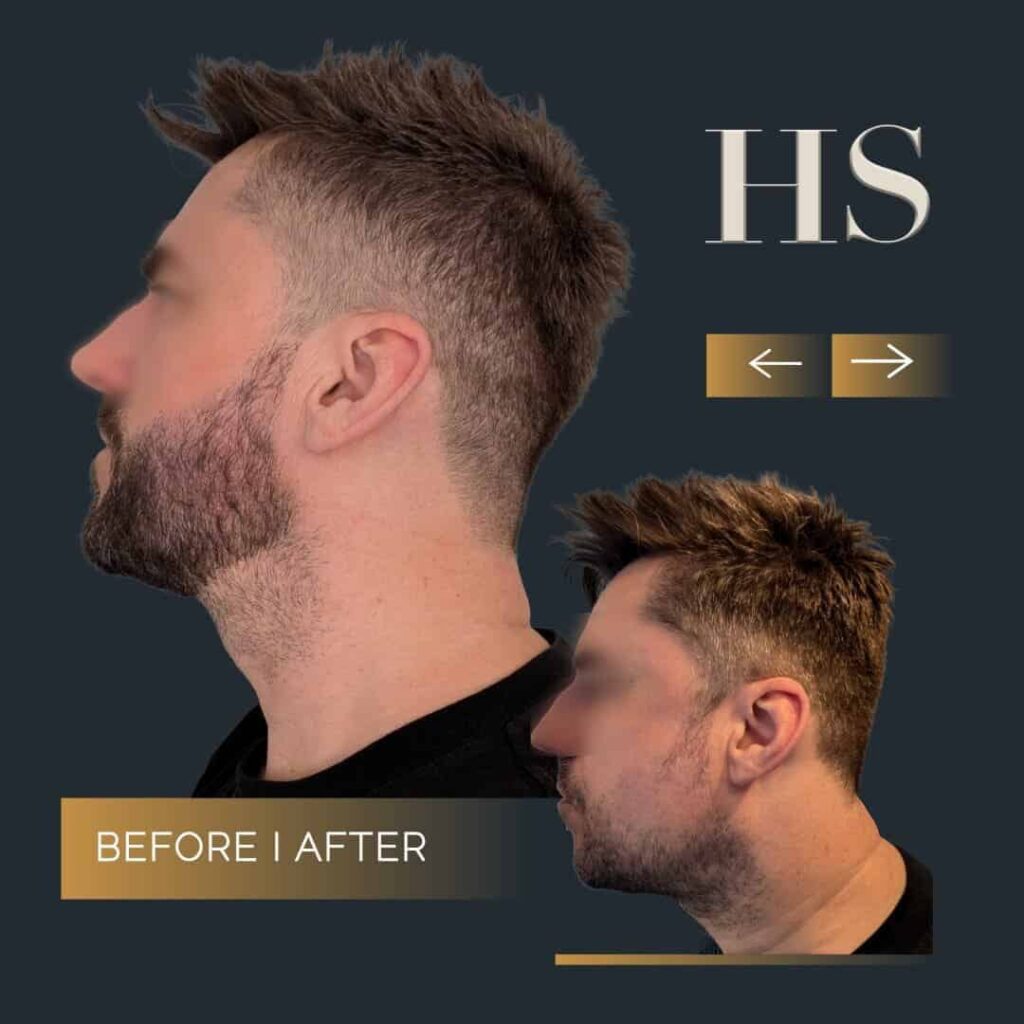
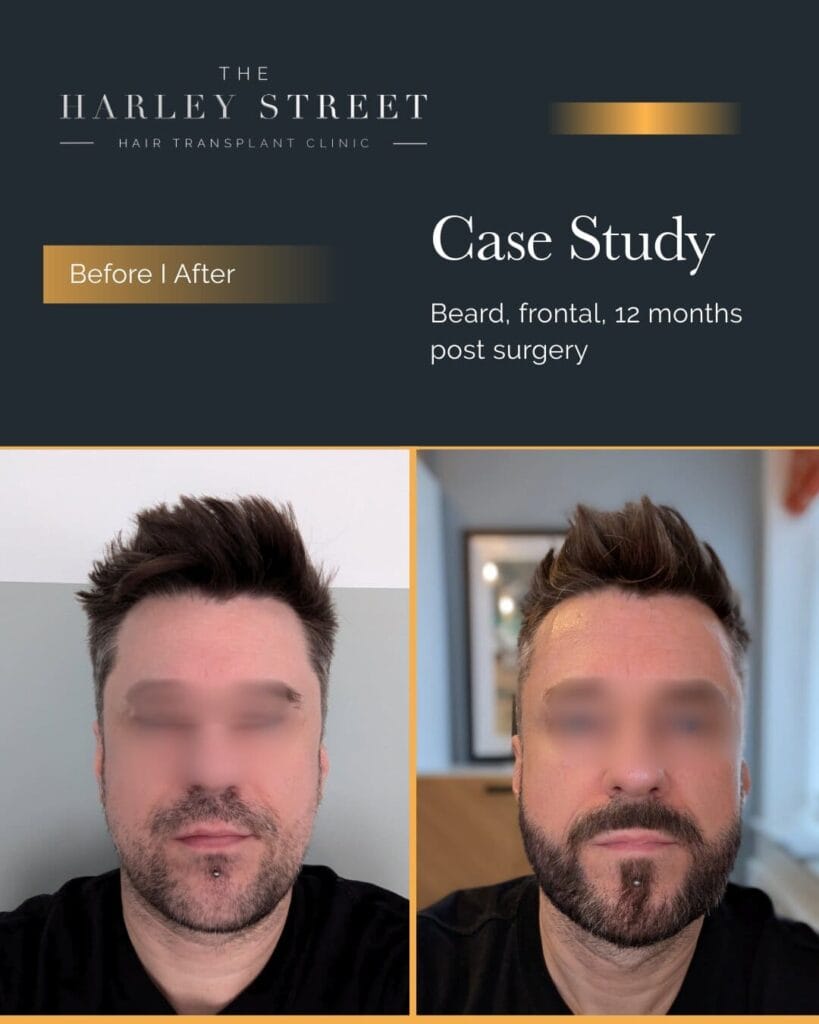
Before and After Beard Transplant Results in Belfast
A selection of results from patients treated at our Belfast clinic. Every procedure shown was performed by our GMC-registered surgeons. View the full gallery.

Cost
Beard transplant pricing is based on graft count. See our hair transplant costs for current pricing. Finance is available on our hair transplant finance.
Next Steps for your Hair Transplant in Belfast
1) Get in Touch With Us

During the initial call, we will make arrangements to schedule a consultation at a convenient date and time.
2) FREE Online Consultation

The FREE online consultation will give us the opportunity to discuss your concerns and identify the most advantageous treatment plan, along with the associated treatment price.
3) Book Hair Transplant

If you’re happy with the advice and treatment proposal, all that is left to do is schedule your treatment. Let’s eliminate your hair loss and regain your confidence!
Where to Find Us
Hair Transplant Belfast
12-16 Bridge St
Belfast BT1 1LU
Call us to book your free consultation. Our team will confirm availability and answer any questions before you come in.
FAQs
Donor follicles for beard transplants are taken from the scalp, usually from the back and sides. They are matched as closely as possible to the texture and calibre of existing beard hair. Scalp hair used in the beard will grow at the same rate as scalp hair, which means trimming slightly more frequently than natural beard hair.
Yes, when performed correctly. The angle, depth and direction of implantation determine whether the result looks natural. Using the DHI technique with a Choi pen gives the surgeon precise control over these variables. Showing your surgeon photographs of the beard shape you want at consultation helps ensure the design meets your expectations.
A beard transplant typically takes four to six hours depending on the number of grafts. We see one patient per surgeon per day, so the full session time is available to your procedure without time pressure.
Yes, once the transplanted hairs have established, usually from around four months. In the first two to three weeks after the procedure, the grafts should not be shaved or disturbed. After shedding and during the regrowth phase, normal shaving can resume.
Yes. The transplanted follicles come from the permanent donor zone and retain their growth characteristics after transplantation. The result is lifelong.
No. Beard transplants are specific to male facial hair restoration.
Patient Testimonials
Aside from achieving fantastic results, we believe that keeping in touch with our patients before, during and after their hair transplantation procedure is paramount – it helps to keep our patients feeling calm and in control. We’re always on hand to provide guidance, support and aftercare advice. Time and again, our patients tell us that this is what sets us apart from other clinics.
You can read our great reviews of FUE hair transplants over on Google and Trustpilot